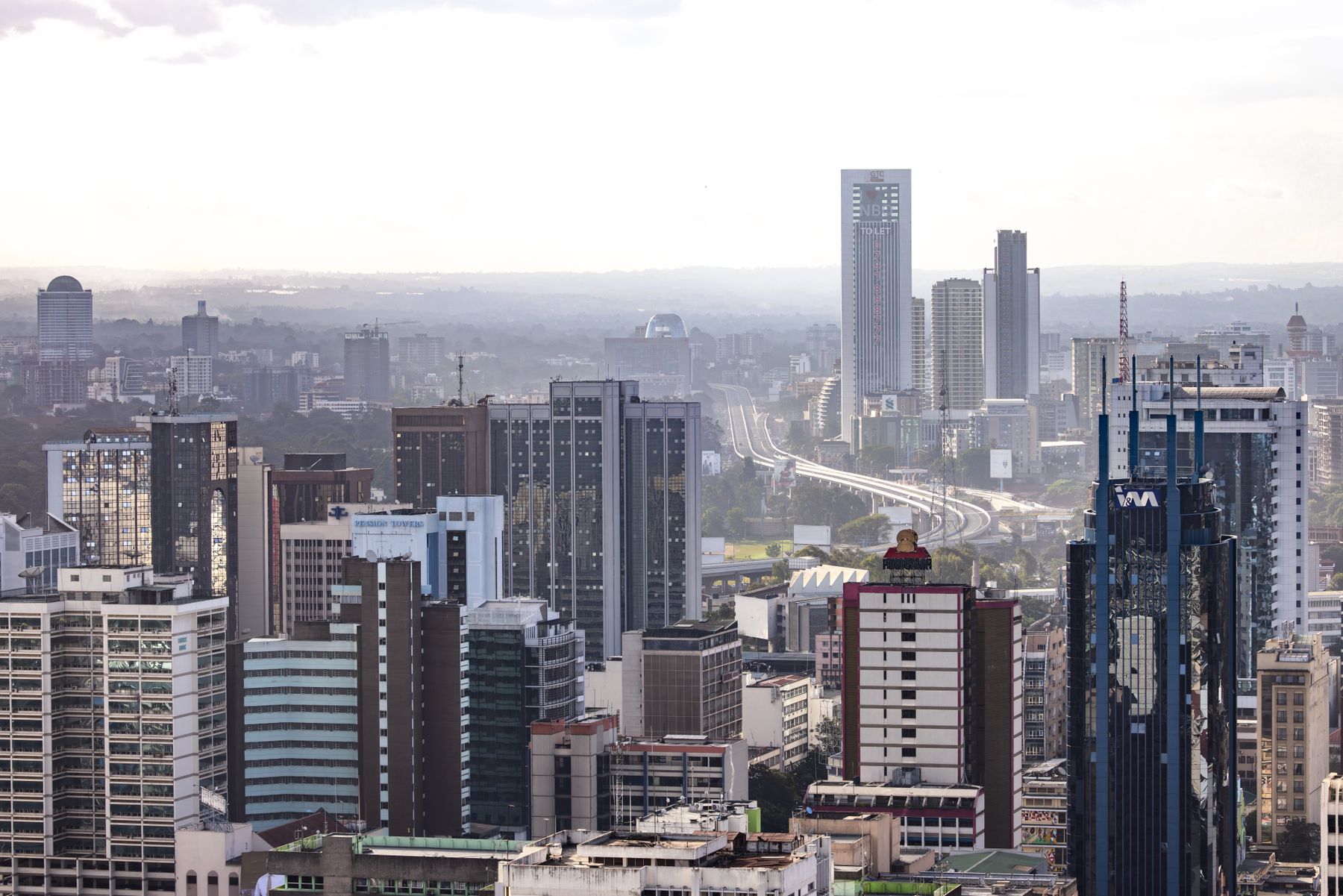
01The flat spine: City Square to the Central Business District
The most manageable ground in Nairobi Central runs from the edge of the Central Business District along City Hall Way and Taifa Road, past City Square and its fountains, to the Kenyatta International Convention Centre on Harambee Avenue. This band sits on a plateau with only gentle gradients, wide pavements and several drop kerbs, and the mature trees around City Square give real shade from about 10am. Mornings before 8am are quieter, cooler and easier to cross at the junctions where traffic turns quickly off Parliament Road.
Pavement quality varies block by block. Kenyatta Avenue and Mama Ngina Street are generally broad and in decent repair, with tactile paving on some crossings; side streets such as Kimathi Street and Standard Street are narrower, with poles, bollards and open drains that need attention. Wheelchair users should expect to share the road edge in places. Book a hotel within this flat band rather than up the hill, and the whole centre becomes a series of ten-minute walks rather than taxi trips.
02What sits uphill, and how to skip the climb
Upper Hill and the area around Nairobi Hospital climb sharply from Kenyatta Avenue, and the roads between them are steep and often without continuous pavement. University Way and Ragati Road rise steadily; the walk from the central grid to the Kenya National Archives side of Tom Mboya Street is fine, but pushing on towards Community and Ngong Road is hard work. Treat Upper Hill as a taxi destination, not a walking one, and ask to be dropped at the building entrance rather than the main road.
The same applies to the museum district. The Nairobi National Museum on Museum Hill is around 2.5 kilometres from the central grid, and while the roads are paved the last stretch up Museum Hill is a climb. A short taxi, roughly 10 to 20 minutes depending on traffic, is the sensible option. Inside, the museum has lifts and level galleries, and the adjacent snake park and botanic gardens have paved paths. Skip the walk, keep the energy for the exhibits.
03Parks, markets and where the pavements fail
Uhuru Park and the adjoining Central Park offer some of the best level walking in the city: broad tarmac paths, benches, and views over the skyline. Enter from Uhuru Highway or Processional Way, both of which have crossing points, and go early. The park paths are largely flat but not uniformly maintained, so a companion helps on the quieter loops. Combine a park circuit with the City Square stretch for a comfortable two-hour outing with plenty of places to rest.
City Market on Muindi Mbingu Street and the surrounding trading streets are lively but difficult: crowded pavements, kerbs used as loading bays, and uneven surfaces. If markets are the goal, go with a companion, keep to the wider edge of Muindi Mbingu Street and treat the interior aisles as a slow, careful walk. The Maasai Market, when it sets up at different central sites on different days, is similar. For an easier shopping stop, the covered arcades along Kimathi Street and the ground floor of the larger hotels are step-free and calm.
04Choosing a base and getting around without strain
For limited mobility, the practical choice is a hotel on or just off Kenyatta Avenue, Mama Ngina Street or City Hall Way, where the flat band begins. Confirm three things before booking: a lift to your floor, a step-free entrance without a high kerb, and a room away from the traffic side. Hotels around the central grid put City Square, the archives and the convention centre within a ten- to fifteen-minute level walk, and taxis reach the door. Prices in the centre generally run higher than in Westlands or along Ngong Road, so weigh convenience against budget.
Taxis and ride-hailing cars are cheap enough for short hops and are the realistic way to reach Upper Hill, the museum or the railway museum on Station Road. Traffic in the central grid is heavy from about 7.30am to 9.30am and again from 5pm to 7pm, so build in time. The dry months from January to March and June to October give the most reliable walking weather; the long rains in April and May leave pavements slick and drains full. I would book a central hotel in the dry season and walk the flat spine daily, taking taxis only for the hills.
Where this page comes from
Desk research, not fieldwork. Nobody writing this stood on the corner with a stopwatch, and a page that implied otherwise would be the least trustworthy thing on the site. The specifics above came from here:
- Written for this site by its editor. No outside source is claimed for it.
Opening hours, ticketing and market days change. No hotel or operator pays to appear here.
05Questions
Is central Nairobi walkable with a wheelchair?+
Partly. The plateau around City Square, Kenyatta Avenue and Mama Ngina Street has wide pavements and some drop kerbs, but broken surfaces, poles and open drains are common on side streets. A companion helps, and a taxi covers the steep areas.
Which streets are flattest in Nairobi Central?+
City Hall Way, Taifa Road, Kenyatta Avenue, Mama Ngina Street and Harambee Avenue are the most level. The ground rises sharply towards Upper Hill and Museum Hill, so keep those for taxis.
How far is the Nairobi National Museum from the centre?+
About 2.5 kilometres, up Museum Hill. Roads are paved but the final climb is steep, so a taxi of roughly 10 to 20 minutes is easier. The museum itself has lifts and level galleries.
When is the best time of year to walk in Nairobi?+
January to March and June to October are the driest months, with reliable walking weather. April and May bring long rains that leave pavements slippery, and the short rains arrive around November.
How much is a short taxi in the centre?+
Short hops within the central grid and to nearby districts are inexpensive by international standards, but fares vary with traffic and demand. Agree the fare or use a ride-hailing app before setting off.
Are Uhuru Park paths suitable for limited mobility?+
Yes, largely. The main paths are broad and mostly level, entered from Uhuru Highway or Processional Way. Some quieter loops are less well maintained, so go in the morning with a companion.
Should I stay in the centre or Westlands?+
The centre suits travellers who want level walking access to City Square, the archives and the convention centre. Westlands has more hotel choice but needs a taxi for central sights, especially during peak traffic.
Can I visit City Market without much walking?+
It is difficult. Pavements around Muindi Mbingu Street are crowded and uneven, and loading happens at the kerb. Go with a companion, keep to the wider street edge, or shop in the step-free hotel arcades instead.