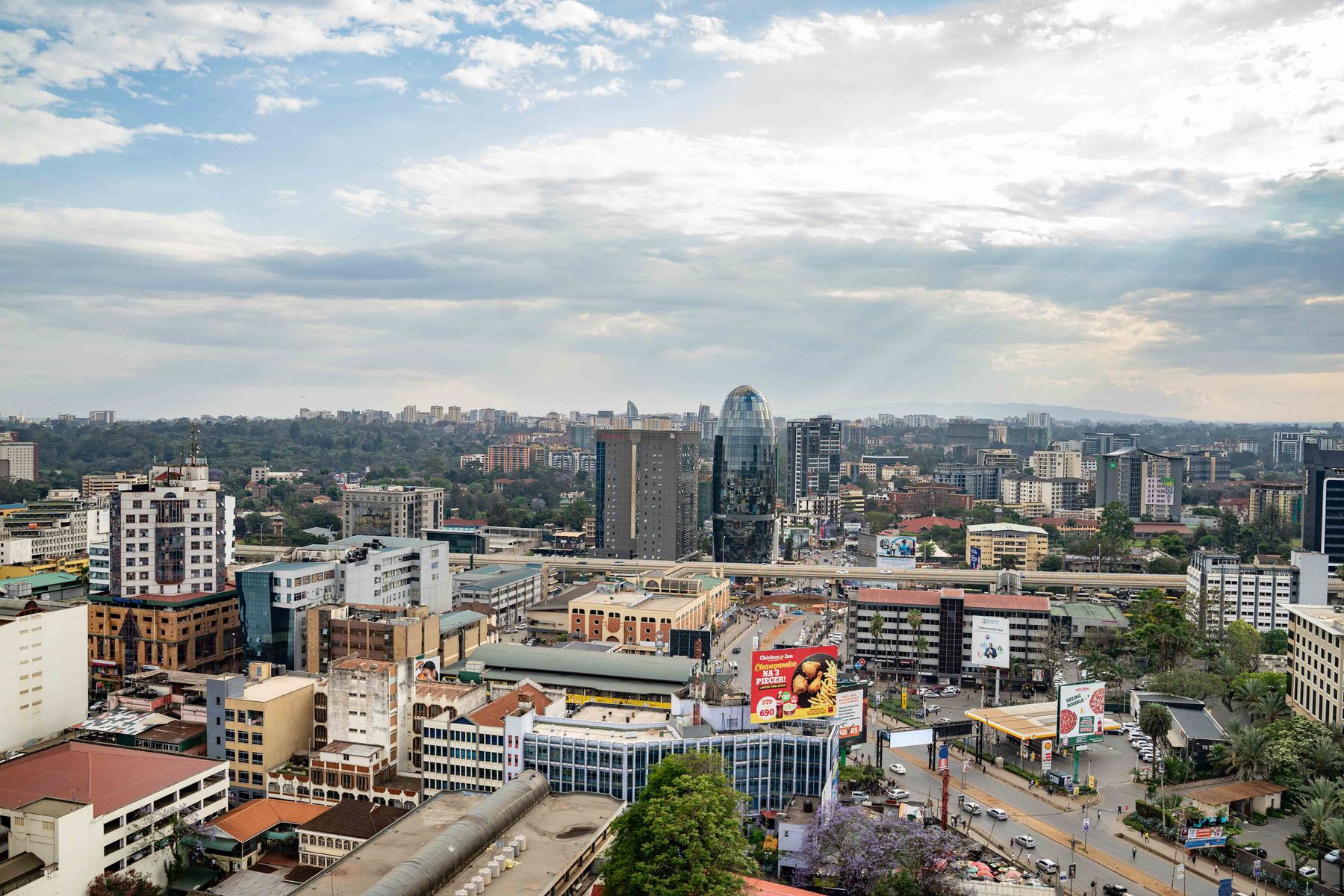
01What Actually Works in the City Centre
Cards are accepted almost everywhere you will want to spend money in Nairobi Central — supermarkets such as Carrefour at Two Rivers and Naivas on Kenyatta Avenue, fuel stations, pharmacies and mid-range restaurants all take Visa and Mastercard. Smaller places are the exception: kiosks, matatu crew, street food stands, market traders at City Market and most small cafés operate on cash or M-Pesa, the mobile money service that locals use for everything from electricity tokens to taxi fares. Assume you need both a card and a modest cash float.
M-Pesa is not something tourists can easily set up without a Kenyan SIM and local registration, so do not build a plan around it. Instead, treat it as the reason many businesses keep little cash on hand: some small shops genuinely cannot break a large note. Carry smaller denominations — 200 and 500 shilling notes — for tips, parking attendants and quick purchases. A ride-hailing fare in light traffic across the CBD is modest, but the driver will often prefer cash to a card reader that may not work.
02ATMs and Where to Find Them
Reliable ATMs cluster along Kenyatta Avenue, Kimathi Street and Mama Ngina Street, with bank branches of Equity, KCB, Absa and Standard Chartered within a few blocks of each other. Inside malls — the Sarova Stanley arcade, Village Market is too far north to count, but the CBD's Bazaar Plaza and Hilton Arcade have machines — you get better lighting and a guard at the door. Airport arrivals at JKIA have ATMs in Terminal 1A, useful if you arrive late and need cash for a taxi into town, a drive of roughly 30 to 45 minutes depending on Mombasa Road traffic.
Withdraw in daylight where possible and use machines attached to a bank branch rather than a free-standing kiosk ATM. Notify your bank before travelling so the transaction does not trip a fraud block, and check whether your card charges a foreign transaction fee on top of the local operator's fee. If you are staying several nights, one larger withdrawal beats four small ones, because the fixed fee per transaction is the expensive part. Declining the ATM's own currency conversion — choosing to be charged in Kenyan shillings — usually costs less, though your bank's rate is the final word.
03Cards, Exchangers and the Bureaux Question
Foreign exchange bureaux line Kimathi Street and the ground floor of several CBD arcades, and they typically quote better rates than hotel reception desks. Bring clean, untorn notes: bureaux and banks in Kenya are strict about damaged or older-series US dollar bills, and a torn note can be refused outright. Do not change money on the street, however good the rate sounds. If you are arriving with euros or pounds, the same branches and bureaux handle them, but the dollar remains the most liquid currency to carry.
For hotel payment, most Nairobi Central properties take cards, though smaller guesthouses may add a card surcharge or ask for a deposit by bank transfer. Ask before you arrive if you are booking a budget room. I would book a mid-range hotel in the CBD or along Upper Hill with a card-backed booking and settle the balance on arrival by card where accepted, keeping cash for the day-to-day. Kilimani and Westlands have denser card acceptance than the older CBD streets, so plan your cash stops accordingly.
04Taxis, Tipping and Everyday Spending
Ride-hailing apps such as Bolt and Uber let you pay by card in-app, which removes the cash question for airport runs and evening trips. Traditional taxis outside the Hilton and at the Kenyatta Avenue rank expect cash, and you should agree the fare before getting in. Tipping is not obligatory in Kenya, but rounding up a restaurant bill or handing a porter a small note is common and appreciated. Museum entry at the Nairobi National Museum on Museum Hill and the Karen Blixen Museum can be paid by card, though carrying cash avoids a queue if the terminal is down.
For a day out — the Nairobi Gallery at Nyayo House, a coffee in the CBD, a matatu to Yaya Centre — keep roughly the equivalent of a modest daily float in shillings and leave the rest in the hotel safe. Best months for a Nairobi trip are January to February and June to September, the drier stretches; the long rains in April and May make traffic worse and can strand you away from an ATM. Sunday mornings are quiet in the CBD, and some smaller shops close, so withdraw on Saturday.
05What I Would Skip
Skip airport forex desks if you are heading straight into town — rates are poorer and the queue at arrivals can be long. Skip the free-standing ATMs in dim arcades and any machine that looks tampered with, and skip carrying a money belt stuffed with large notes; a modest wallet with a mix of denominations is easier. If a shop claims its card machine is broken and offers to walk you to an ATM, just pay cash or leave, which is a sensible habit anywhere.
Skip the temptation to change money with a stranger offering a rate that beats Kimathi Street. Keep a second card in a different bag from the first, note your bank's emergency number, and photograph the back of your cards before you fly. Nairobi Central is a busy, businesslike district with plenty of banks and good card coverage; the practical risk is inconvenience, not scarcity.
Where this page comes from
Desk research, not fieldwork. Nobody writing this stood on the corner with a stopwatch, and a page that implied otherwise would be the least trustworthy thing on the site. The specifics above came from here:
- Written for this site by its editor. No outside source is claimed for it.
Opening hours, ticketing and market days change. No hotel or operator pays to appear here.
06Questions
Can I use my Visa or Mastercard across Nairobi Central?+
Yes, at supermarkets, malls, fuel stations, mid-range restaurants and most hotels in the CBD and Upper Hill. Small kiosks, market stalls and traditional taxis are cash-only, so carry a few thousand shillings for those.
Where are the safest ATMs in the city centre?+
Bank-branch machines on Kenyatta Avenue, Kimathi Street and Mama Ngina Street, and those inside arcades such as Bazaar Plaza with a guard at the door. Withdraw in daylight and avoid isolated kiosk ATMs.
Does M-Pesa work for tourists?+
Only with a Kenyan SIM and local registration, which is not practical for a short visit. Most businesses that rely on M-Pesa will still take cash, so do not plan around setting it up.
How much cash should I carry day to day?+
Enough for a taxi, a meal and small purchases, roughly a modest daily float in shillings, with the rest left in the hotel safe. Withdraw larger sums less often to reduce fixed ATM fees.
Can I change US dollars easily?+
Yes, at bureaux on Kimathi Street and bank branches in the CBD. Bring clean, untorn notes, as older or damaged bills may be refused. Avoid street changers entirely.
Do taxis take cards?+
Ride-hailing apps like Bolt and Uber allow in-app card payment. Traditional taxis at the Kenyatta Avenue rank and outside the Hilton expect cash, so agree the fare before you set off.
Is tipping expected in Nairobi?+
Not obligatory. Rounding up a restaurant bill, or a small note for a porter or driver, is common and appreciated. Ten percent is a reasonable guide where service is good.
When is the best time to visit Nairobi Central?+
January to February and June to September are the drier, more comfortable months. April and May bring long rains and heavier traffic, and Sunday mornings are quiet with some smaller shops closed.