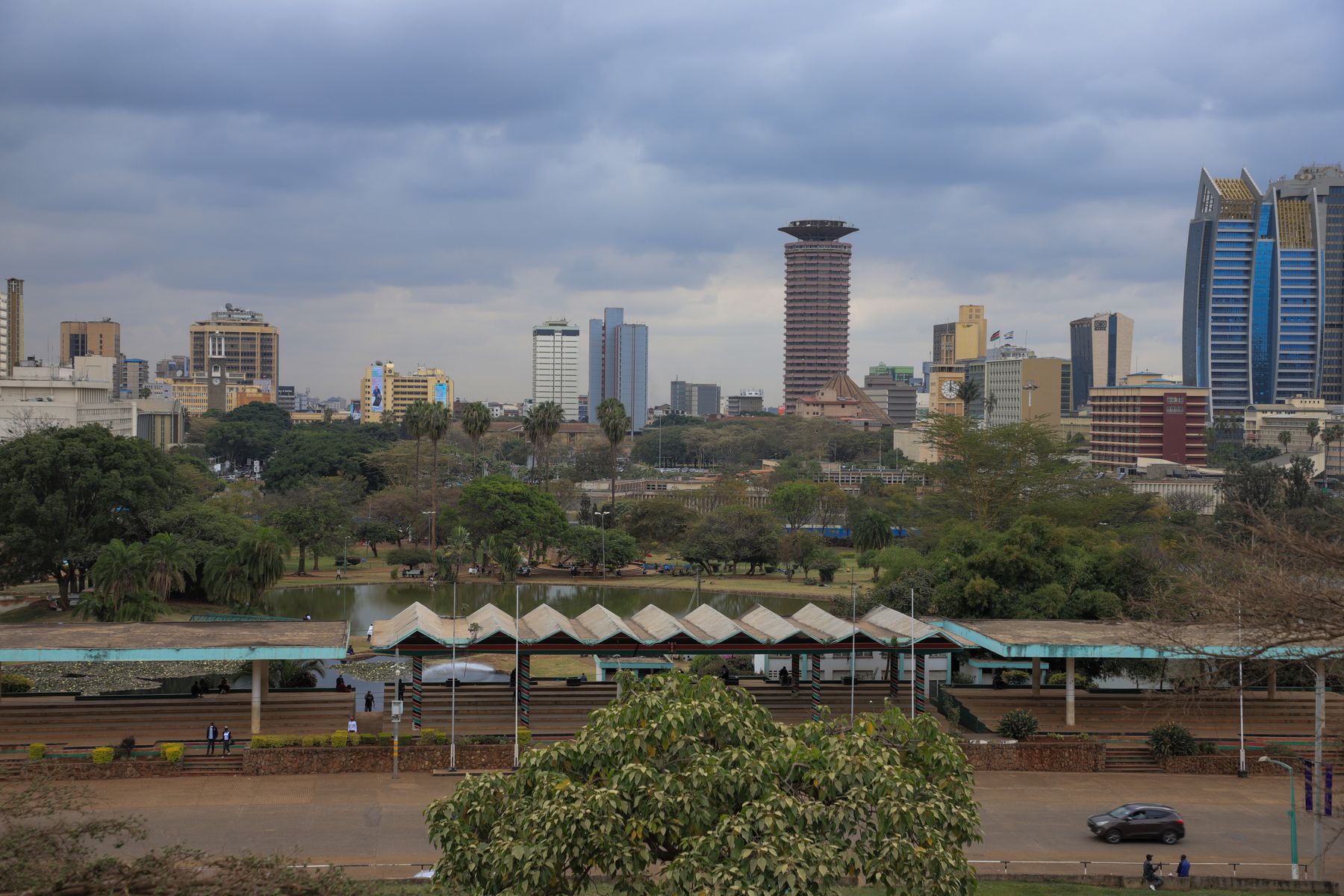
01What Nairobi's crossings actually look like on the ground
Central Nairobi mixes three kinds of pedestrian infrastructure, and each behaves differently. Signalised crossings with painted zebra stripes appear along Kenyatta Avenue, Moi Avenue and Haile Selassie Avenue, usually paired with traffic lights. The wide avenues radiating from the roundabout at Kenyatta Avenue and Uhuru Highway carry some of the heaviest flow, and their signals are generally obeyed. Painted stripes without lights, found on quieter streets like Standard Street or Kaunda Street, depend entirely on driver courtesy and are best treated as a starting point for a conversation with traffic rather than a guarantee.
Footbridges and underpasses are the third category. Nairobi has invested in elevated walkways, including the one spanning Uhuru Highway near the Kenyatta International Convention Centre and the structures around the Nyayo Monument and the railway station. These are genuinely the safest crossings in the city centre, but they add distance and stairs. Underpasses near the railway station and around Machakos Bus Station are functional but poorly lit in places; many residents prefer the footbridges above. If you are staying near Kimathi Street or Muindi Mbingu Street, you will use the footbridge network more than any zebra crossing.
02Timing your walk around the working day
Traffic volume in the CBD peaks between roughly 7am and 9am, then again from 5pm to 7pm, when matatus, buses and private cars converge on Moi Avenue, River Road and the approaches to the Nyayo Monument roundabout. Crossing during these windows is legal and possible at signalised junctions, but you will wait longer and the gaps between vehicles close quickly. The calmest hours are mid-morning, around 10am to noon, and early afternoon before 3.30pm. Sunday is noticeably quieter throughout the centre, though some crossings near the law courts see less foot traffic and fewer marshals.
Rain changes everything. Nairobi's long rains run from roughly late March into May, short rains from October into December, and during a heavy downpour, drains overflow at low points on Haile Selassie Avenue and near the Country Bus Station. Painted stripes become slippery and visibility drops. Sidewalks on the western edge of the CBD, around Parliament Road and Taifa Road, drain better than the eastern side near River Road. If you are walking to Upper Hill, allow 25 to 35 minutes from the central hotels; the climb up Ragati Road and Ngong Road is steady, and there are few crossings on the busy stretch near Community.
03Reading the traffic, matatus and bodabodas
Nairobi traffic moves on the left, which surprises some visitors arriving from Europe or North America. Look right first, then left. Matatus and buses pull into stops sharply and often stop half in the lane, so a crossing that looks clear can fill up behind a stopped minibus. Bodaboda motorcycle riders weave between lanes and sometimes mount pavements; before stepping off a kerb, glance both ways twice, and never step out from between parked vehicles or a stationary bus. The county's traffic marshals, in reflective vests, operate at several junctions near the Kenyatta Avenue roundabout and outside the General Post Office on Kenyatta Avenue, and following their hand signals is safer than reading the lights alone.
Hand signals matter. A driver's palm raised usually means they are yielding, but confirm by watching the vehicle slow, not by trusting the gesture. At roundabouts such as the one at Kenyatta Avenue and Uhuru Highway, there is no pedestrian phase at all; you cannot legally cross the carriageway directly, and the footbridge or a signalised crossing a short walk away is the correct route. Tuk-tuks and taxis will often stop for a pedestrian, but they block the view of the lane behind them. Keep headphones off and phones in a pocket while crossing.
04Choosing where to stay to minimise risky crossings
If walking is part of your plan, the position of a hotel relative to the footbridge network matters more than star rating. Hotels around Kimathi Street, Muindi Mbingu Street and the stretch of Kenyatta Avenue between the Hilton area and the General Post Office put you within a few minutes of signalised crossings and the Uhuru Highway footbridge, which links the CBD to the KICC and the museum-bound roads. Properties nearer University Way and the museum district sit north of the busiest avenues and make the walk to the Nairobi National Museum along Museum Hill less exposed. Expect a wide range in room rates across these areas, with central business-district stays generally higher than those a short taxi ride out.
For Upper Hill, staying on the hill itself avoids the twice-daily descent and climb through heavy traffic. For the railway station area and Machakos Bus Station, use a taxi after dark rather than crossing the wide approaches on foot; the footbridge is lit but the surrounding streets are quiet late in the evening. My own choice for a first visit is a hotel within a block or two of Kenyatta Avenue or Muindi Mbingu Street, where a signalised crossing, a footbridge and a staffed junction are all within a three-minute walk, and where evening strolls to nearby restaurants do not require crossing Uhuru Highway.
Where this page comes from
Desk research, not fieldwork. Nobody writing this stood on the corner with a stopwatch, and a page that implied otherwise would be the least trustworthy thing on the site. The specifics above came from here:
- Written for this site by its editor. No outside source is claimed for it.
Opening hours, ticketing and market days change. No hotel or operator pays to appear here.
05Questions
Are Nairobi's zebra crossings legally enforceable?+
Yes. Painted crossings give pedestrians right of way in Kenyan law, but enforcement is uneven in the CBD. At signalised junctions on Kenyatta, Moi and Haile Selassie avenues, compliance is good. At unmarked stripes on quieter side streets, treat eye contact and a slowing vehicle as your real green light.
Which is safer, the footbridge or the zebra crossing near the KICC?+
The footbridge over Uhuru Highway is safer. That highway carries fast, multi-lane traffic and has no pedestrian phase at the nearby roundabout. The crossing adds a short climb but removes the risk entirely. Use it whenever your route crosses Uhuru Highway, day or night.
What time of day should I avoid walking across the CBD?+
Roughly 7am to 9am and 5pm to 7pm, when matatus and commuter traffic peak. Mid-morning and early afternoon are calmer. After dark, stick to lit streets and signalised junctions, and take a taxi for longer hops such as the railway station to Upper Hill.
How long does it take to walk from a central hotel to the Nairobi National Museum?+
From hotels near Kenyatta Avenue, allow 30 to 40 minutes on foot via Museum Hill, using signalised crossings on Kenyatta Avenue and the footbridge near the KICC. Many visitors take a short taxi instead. The walk is pleasant in the dry months and along the shaded stretch past the University of Nairobi.
Do I need to tip or pay anyone to cross the road?+
No. Nairobi's crossings are free and public. You may see informal car-washers or vendors at junctions, but there is no toll or fee. Traffic marshals direct pedestrians as a public service; a friendly nod is thanks enough.
Is it safe to walk from the CBD to Upper Hill during the rainy season?+
It is workable but wet. The climb along Ragati Road and Ngong Road has narrow pavements in places. Heavy rain overwhelms drains near Haile Selassie Avenue, and painted lines get slippery. Carry a light rain jacket, use the signalised crossings, and consider a taxi if the downpour is heavy.
Which months are best for walking around central Nairobi?+
January and February are generally dry and clear, as is much of June to September. Avoid the long rains from late March into May and the short rains from October into December if you plan long walks. Mornings are cooler and less humid year-round, which makes crossing-heavy routes more comfortable.
How do I cross near the Kenyatta Avenue roundabout?+
Do not attempt to cross the roundabout itself, as there is no pedestrian phase. Use the footbridge near the KICC or the signalised crossings on Kenyatta Avenue and Haile Selassie Avenue, a short walk from the roundabout. Marshals at nearby junctions will point you to the correct place to wait.