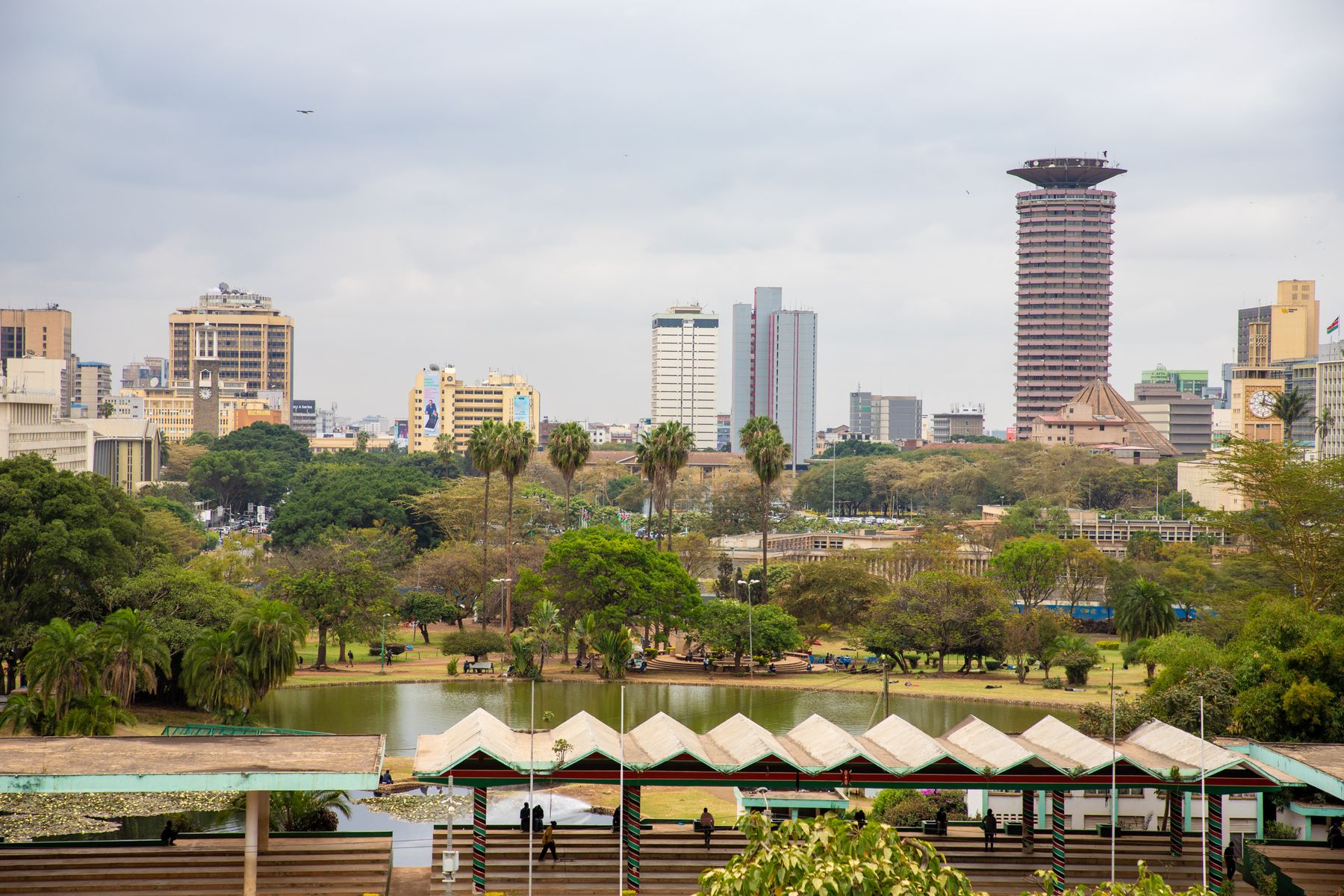
01The Geography: What Separates the Two Districts
Nairobi Central is the old commercial grid — Moi Avenue, Kimathi Street, Muindi Mbingu Street and the area around the Hilton and Kenyatta International Convention Centre. Upper Hill is the ridge to the west, reached by climbing from Haile Selassie Avenue past Nyayo House and up Ragati Road or Hospital Road. The straight-line distance from Kenyatta Avenue to Upper Hill's office towers is about 2.5km, but the climb adds 60 to 80 metres of altitude, which matters if you are walking in the afternoon heat.
The divide is more cultural than cartographic. Central is dense, noisy and walkable, with pavement hawkers, matatu stages and the Danfo-style bustle around Odeon and Ambassador. Upper Hill is institutional: ministries, the British High Commission on Upper Hill Road, hospitals along Ragati Road, and glass office blocks where pavements are wide but empty after 6pm. Choosing which side to sleep on depends on whether your days start with meetings or with markets.
02Getting Across: Matatus, Buses, Taxis and Boda Bodas
Matatus Route 46 and the number 7 run from the Country Bus Station area up towards Upper Hill and Kenyatta National Hospital; fares are typically in the KSh 50–100 range depending on distance and time of day, and you pay the conductor in cash. They are frequent until around 9pm but crammed at rush hour. For most visitors the cleaner option is a taxi or ride-hailing app: expect roughly KSh 300–600 for the crossing outside peak times, and 45 minutes to an hour in the 7.30–9.00am and 5.00–6.30pm windows.
Boda bodas (motorcycle taxis) cut through the congestion via Kenyatta Avenue and the Haile Selassie slip roads, but I would not recommend them for anyone unfamiliar with Nairobi's traffic rhythm, and they are not permitted on some Upper Hill stretches. Walking is feasible in the dry months — January, February and the cooler July–September window — taking 35 to 45 minutes from Kimathi Street to Upper Hill Road, but stick to daylight and main roads, and avoid the Ngong Road underpass on foot.
03Where to Stay and How to Plan Your Day Around It
If your itinerary is meetings at the Treasury, the Ministry of Health or the hospitals, book Upper Hill and accept quieter evenings; the walk to dinner is short within the district but the area empties early. If you want the markets — City Market on Muindi Mbingu, the Maasai Market at the High Court parking on Fridays — plus the railway museum and the airport bus links, Nairobi Central is the better base. Hotels around Kenyatta Avenue and Muindi Mbingu put you within ten minutes of the KICC and the Kencom bus stage.
Budget one hour for any cross-district appointment, and two if rain hits, because the Haile Selassie and Nyayo House roundabouts flood and stall. Mornings are the reliable window: leave Central before 7am and the climb takes fifteen minutes by car. Airport transfers from JKIA take 40 to 70 minutes depending on the Mombasa Road flow, so a Central hotel is marginally better positioned for early flights via the Expressway. Book your room on the side of the city where your first appointment sits, not your last.
04Practical Details: Money, Landmarks and What to Skip
Carry small notes for matatus and boda bodas; M-Pesa is accepted almost everywhere but street transport still prefers cash. Landmarks worth using as navigation anchors are the Nyayo Monument roundabout, the Kenyatta International Convention Centre's tower, the Cathedral Basilica on City Hall Way, and the Upper Hill water tanks visible from Haile Selassie. If a driver claims not to know Upper Hill Road, name the British High Commission or the Nairobi Hospital instead — those register instantly.
Skip the temptation to walk through the Nairobi Railway Club area after dark and skip the Uhuru Highway pedestrian crossings at rush hour, where underpasses are poorly lit. The Nairobi Gallery at the old provincial commissioner's office on Kenyatta Avenue is a quiet hour well spent if a meeting cancels. If you are weighing two hotels, I would book one within 500 metres of Kencom stage for a first visit: transport options multiply and you are never dependent on a single route back.
Where this page comes from
Desk research, not fieldwork. Nobody writing this stood on the corner with a stopwatch, and a page that implied otherwise would be the least trustworthy thing on the site. The specifics above came from here:
- Written for this site by its editor. No outside source is claimed for it.
Opening hours, ticketing and market days change. No hotel or operator pays to appear here.
05Questions
How far is Upper Hill from Nairobi Central?+
About 2.5km in a straight line, or 3.5 to 4.5km by road depending on the route. By car it takes 15 minutes outside peak hours, and 40 to 60 minutes during the morning and evening rush. Walking takes 35 to 45 minutes, climbing roughly 70 metres.
Is it safe to walk between Nairobi Central and Upper Hill?+
In daylight, on main roads such as Haile Selassie Avenue and Ragati Road, it is a normal city walk. Avoid the poorly lit underpasses on Uhuru Highway, keep valuables out of sight and use a taxi after dark. Ask your hotel for current local guidance, as conditions vary street by street.
How much does a taxi cost from Nairobi Central to Upper Hill?+
Expect roughly KSh 300 to 600 with a ride-hailing app or metered taxi outside peak times, and more when traffic stalls. Confirm the fare before departure with street taxis. Matatus on the same corridor typically charge KSh 50 to 100, paid in cash to the conductor.
Which is better for a first-time visitor, staying in Nairobi Central or Upper Hill?+
Nairobi Central, for most first visits. It is walkable, close to the KICC, City Market and the Kencom bus stage, and has more evening options. Choose Upper Hill if your days are built around ministries, hospitals or corporate offices and you value quiet over convenience.
What is the best month to visit Nairobi for walking between districts?+
January and February are dry and clear, and July to September is cooler, which suits the uphill walk. The long rains arrive around March to May and the short rains in November, when Haile Selassie Avenue and the Nyayo House roundabout flood and journeys take noticeably longer.
How long does it take to reach JKIA from Nairobi Central?+
Usually 40 to 70 minutes via Mombasa Road or the Expressway, depending on traffic. Allow extra time for morning departures. Upper Hill adds roughly 10 to 15 minutes to the journey because you must descend into the city first before joining the expressway.
Do matatus run between the two districts at night?+
Service thins sharply after about 9pm. During the day and early evening, routes towards Upper Hill and Kenyatta National Hospital are frequent. For later journeys, budget for a taxi or ride-hailing car rather than relying on matatus, and arrange it through your hotel.
Which landmarks help when giving directions to a driver?+
Name the British High Commission on Upper Hill Road, the Nairobi Hospital on Ragati Road, or the Kenyatta International Convention Centre in Central. These are recognised instantly. Mentioning the Nyayo Monument roundabout also helps drivers fix the transition point between the two districts.